One family crossed eleven countries with a baby to reach a hotel room in Tacoma, Washington. Their answer, and why a family that did everything right is still afraid.
The room on Hosmer Street
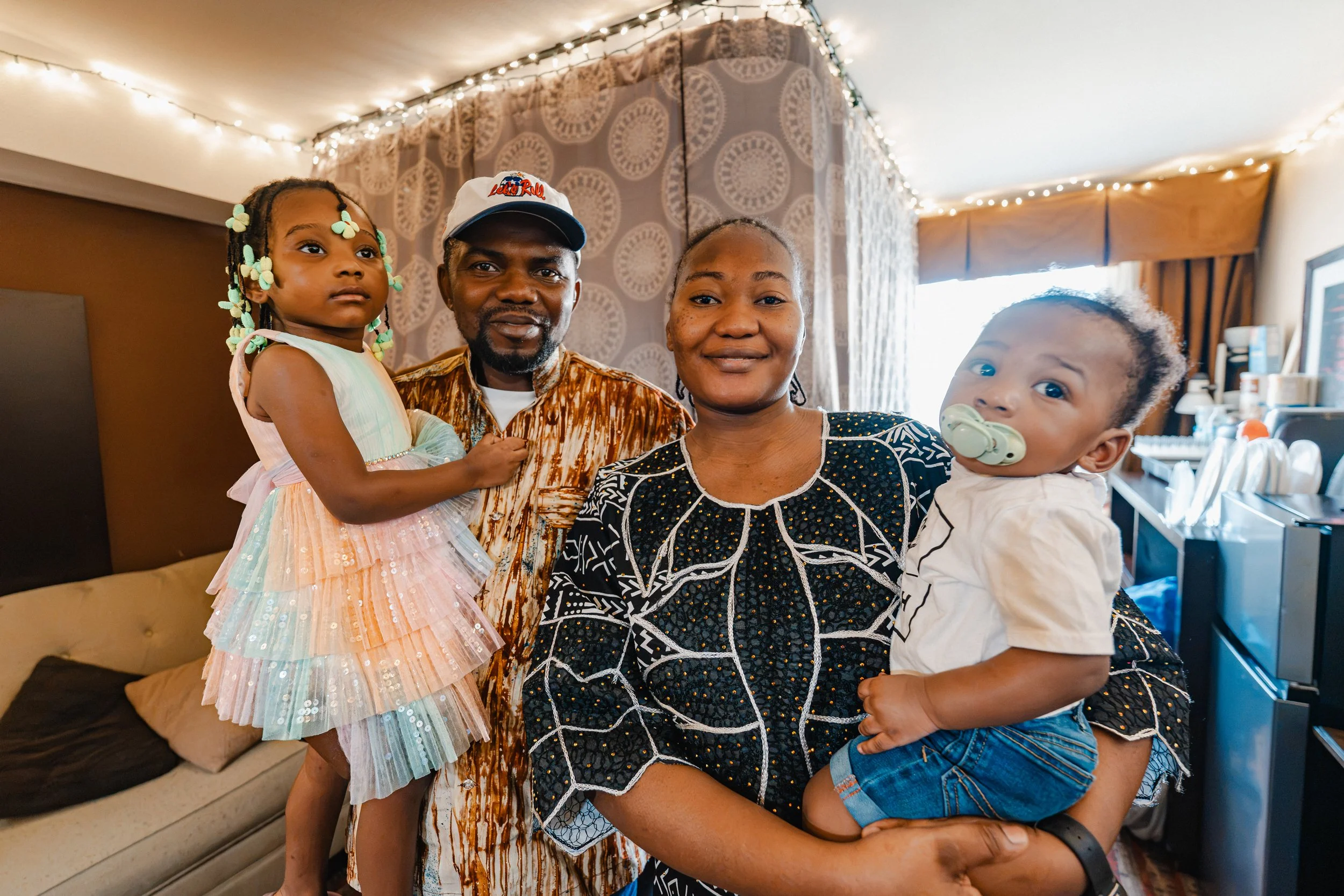
The first thing I noticed was the lights: strung along the ceiling, all the way around, small warm bulbs like somebody had put them up for a party, and on in the middle of the afternoon. The room was still, in its bones, a hotel room. Brown wall, heavy drapes, a window onto the parking lot. But it had been rearranged. A patterned curtain hung floor to ceiling and split it in two, a sitting room on one side and beds on the other, and the counter along the far wall had become a kitchen. Toys sat on the dresser, and more lay on the floor. A room built for a night or two had held this family for two years.
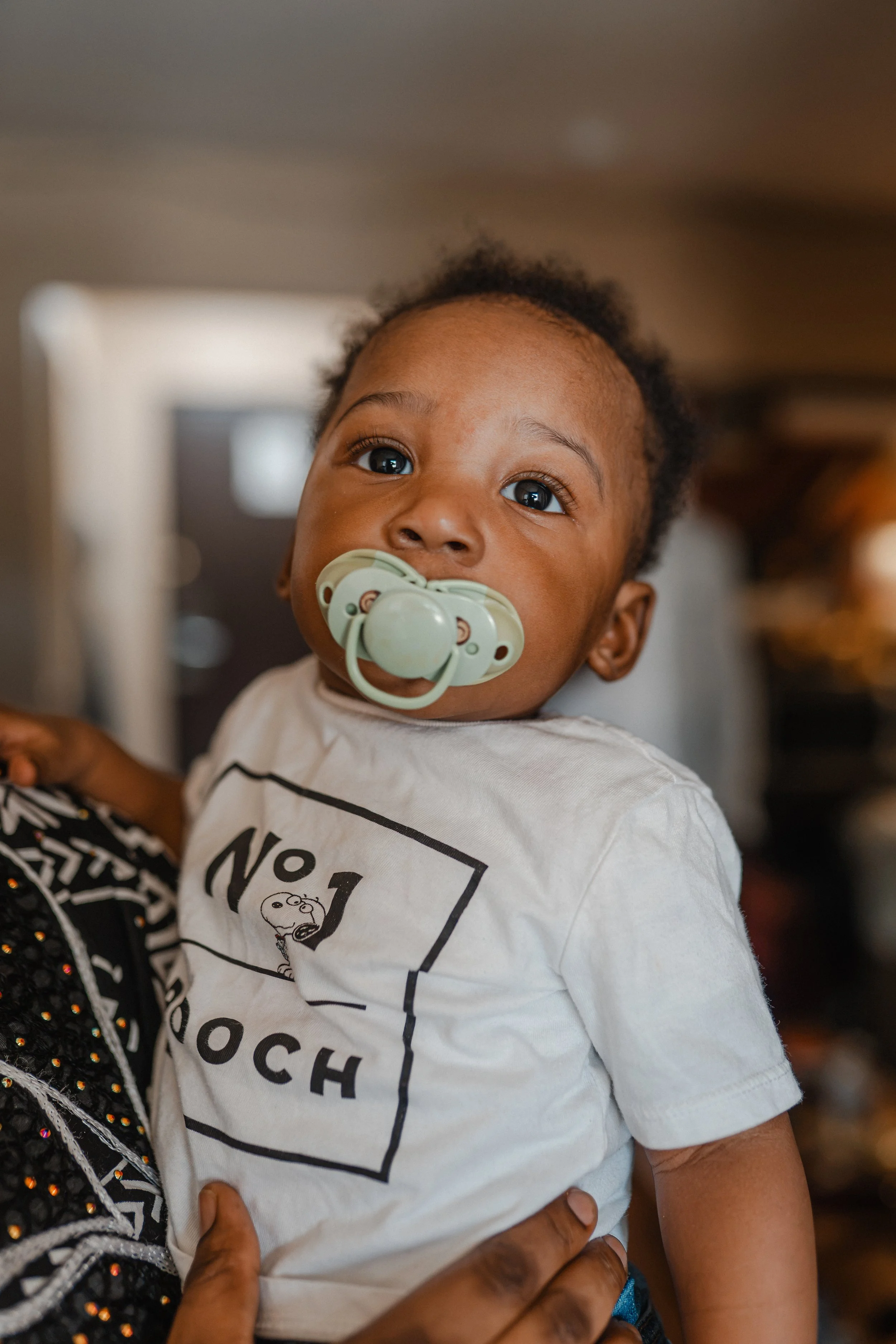
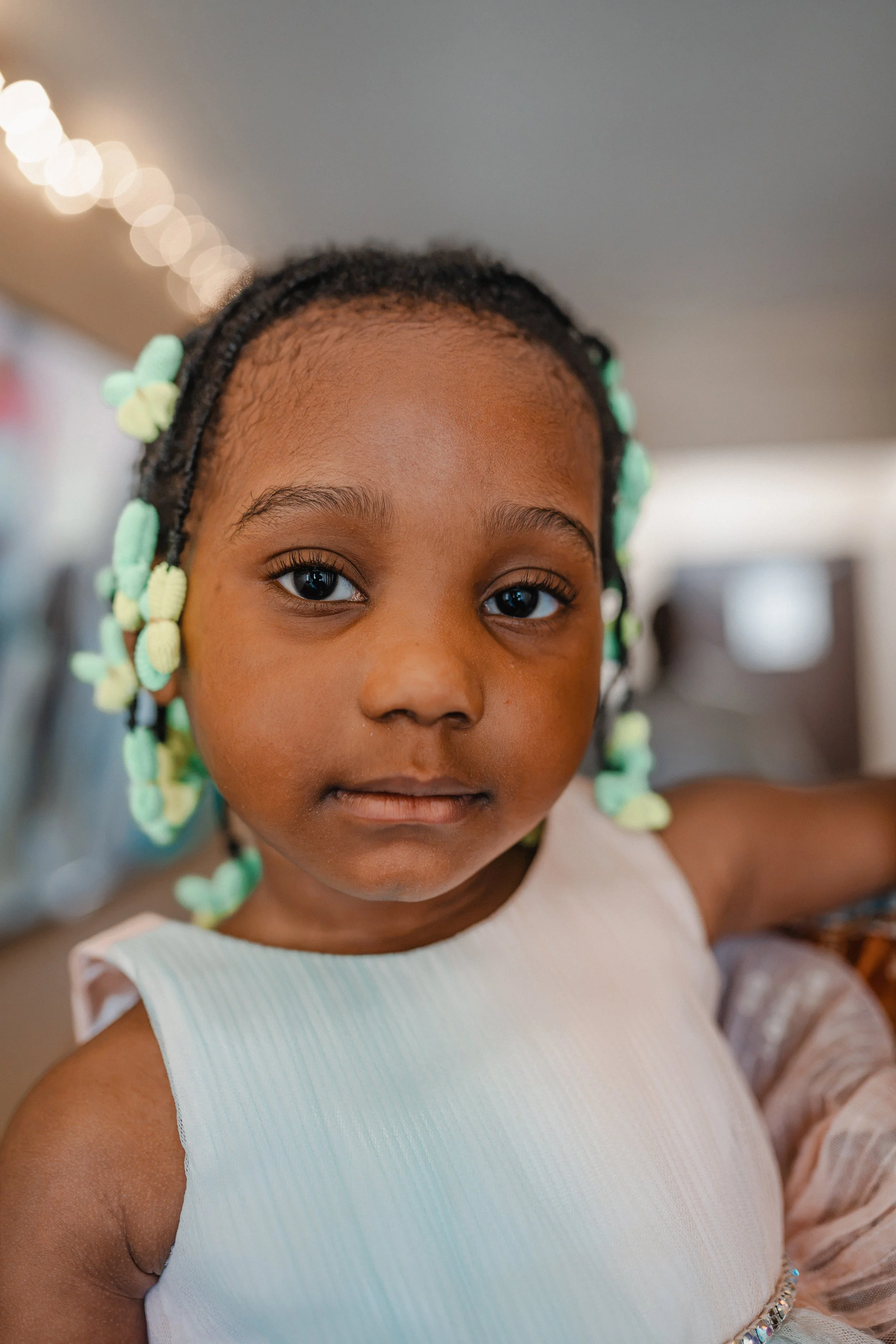
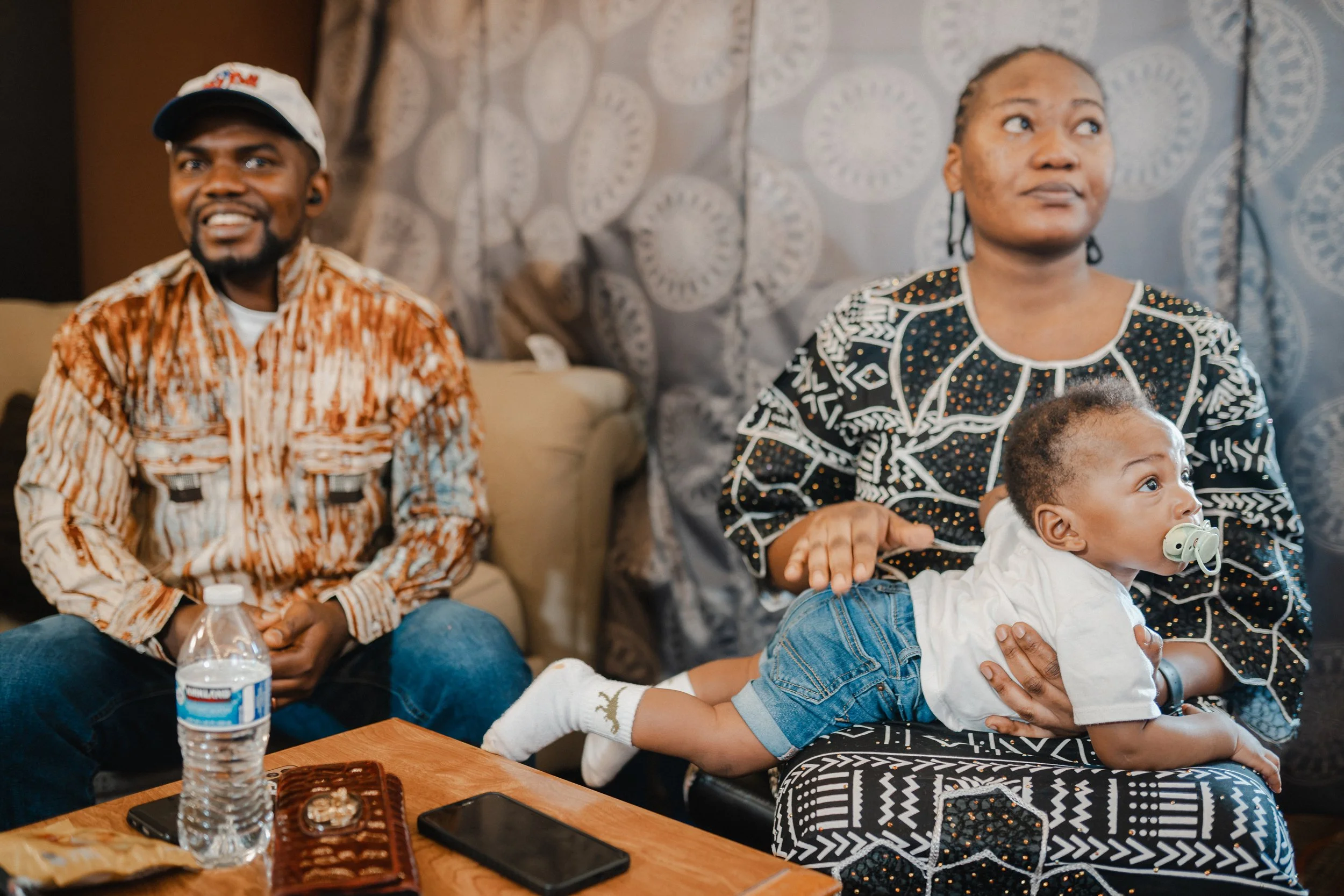
The next thing I noticed was that they had dressed up for me. Domingos wore a patterned button-up and a cap that said: "Let's Roll." Isabel wore a black shirt stitched with white and scattered with gold sequins that caught the light whenever she moved. Their three-year-old daughter watched me the way three-year-olds watch a stranger with a camera, wide-eyed and quiet. The seven-month-old baby squirmed on his mother's lap.
They sat on the couch. Our interpreter sat with us, because the interview would be in French, a language Domingos learned as a boy in another country, for reasons I'd hear soon enough. On the wall, the television played a channel I didn't recognize. I'd come back to it before the afternoon was over.
I came to Thrive International in Tacoma with one question for everyone I met that day: What does home mean to you now? Everything else I asked was just a way of getting at that: where they came from, how they got here, what they carried.
But first I wanted the road.
A country you never stop being afraid in
Domingos was born into a war. Angola's civil war ran twenty-seven years, from independence in 1975 until 2002, and for most of his childhood, the fighting was simply the weather. When it came too close, his parents took the family across the border into Congo. That's why he speaks French. Angola speaks Portuguese; Congo taught him the language he would one day use to tell me his story.
The war ended, but not in victory or peace. The party that won it, the MPLA, has governed Angola without interruption since independence, half a century now. The country is one of Africa's largest oil producers, and a large share of its people live in poverty. Anyone who says so too loudly learns what the state is for. In 2024, Human Rights Watch found Angolan police credibly implicated in killings, sexual violence, arbitrary detention and torture of activists and protesters, in a year when the president signed new laws narrowing what the press, and everyone else, is allowed to say. In July 2025, when the government cut fuel subsidies and the price of getting to work jumped, taxi drivers struck. The strike became a protest, and police answered with tear gas, rubber bullets and live ammunition. By the police's own count, thirty people were killed, 277 injured and more than 1,500 arrested. Organizers were charged with rebellion and terrorism. Activists were shot in the street and beaten in their homes. It was the deadliest unrest since the war, and it wasn't a fluke: Amnesty International's most recent report lists trade unionists, opposition members, journalists and human rights defenders among those arbitrarily arrested and held. This is the country people are leaving. Not a civil war anymore. Something quieter than that, where the people you fear most are the police and the courts.
Eventually the family went back. Domingos grew up, married, found steady work. "I was the manager in the bakery," he told me, and for a moment he was somewhere else: early mornings, the smell of bread, a job with a title. Isabel kept the house. Her younger brother lived with them.
"In Angola, I always lived with fear," he said. "The country was at war for a long time. Everybody was in conflict." He was careful not to make himself special. "We lived like everybody else. But there was insecurity in the country."
Then the insecurity came through the door. The family was threatened. Isabel's brother, the one who lived with them, was killed. The interpreter used the word slaughtered before he corrected himself to killed, and I've kept both, because I think the first one was closer to what Domingos said.
They tried what people try first. "We tried to move to different cities." It didn't work. Whoever was looking for them could find them anywhere in Angola.
I want to say something plainly here, because it gets argued about in the abstract so often that the obvious part disappears. Nobody leaves a country casually. You don't walk away from your house and your job and your language because money is a little tight or because you saw a nicer life on somebody's phone. People leave when staying is worse than going, and even then most of them wait longer than seems reasonable, because a house and a job and a language are not easy things to set down. If you want to know how bad it has gotten somewhere, count the families who finally stopped waiting. For Domingos and Isabel, that was the spring of 2023.
So they did what people do second. They gathered up everything they had, and it was enough to get two people out.
Leaving with a child not yet born
They left Angola on May 12, 2023. Isabel was pregnant.
They flew to Brazil. It's the only leg of the trip Domingos describes without effort. "From Angola to Brazil, we took the plane." Everything after that, he said, "is complicated."
Their daughter was born in Brazil. Sit with that for a second. In the space of a few months, Isabel buried her brother, left her home under threat, and gave birth in a country where she knew no one.
And then they waited. "We spent time in Brazil because to get here with the baby was so difficult. So we waited until the baby had grown a little bit." They weren't waiting for the danger to pass. It wasn't going to. They were waiting for their daughter to be strong enough to survive what came next.
Later I asked whether there had been moments of unexpected kindness along the way, strangers who helped. His answer is the one I keep coming back to.
"Here, yes. In Brazil, no. During the way, no."
He didn't say what happened in Brazil, and I didn't push. Whatever it was, Brazil was a place to get through, not a place to stay.
Eleven countries, three nights in the forest
When I asked him to trace the route for me, he listed countries the way you'd list stops on a bus line. Bolivia. Peru. Ecuador. Colombia. Panama. Costa Rica. Nicaragua. Honduras. Guatemala. Mexico. "And finally we got to America."
Between Colombia and Panama, he paused. I've talked with enough people who've walked this route to know what lives in that pause. The Darién Gap is a stretch of jungle, river, and mountain with no road through it, and the people who cross it on foot share the trail with thieves, snakes, and floods that come up without warning.
"We slept three days in the forest with the baby."
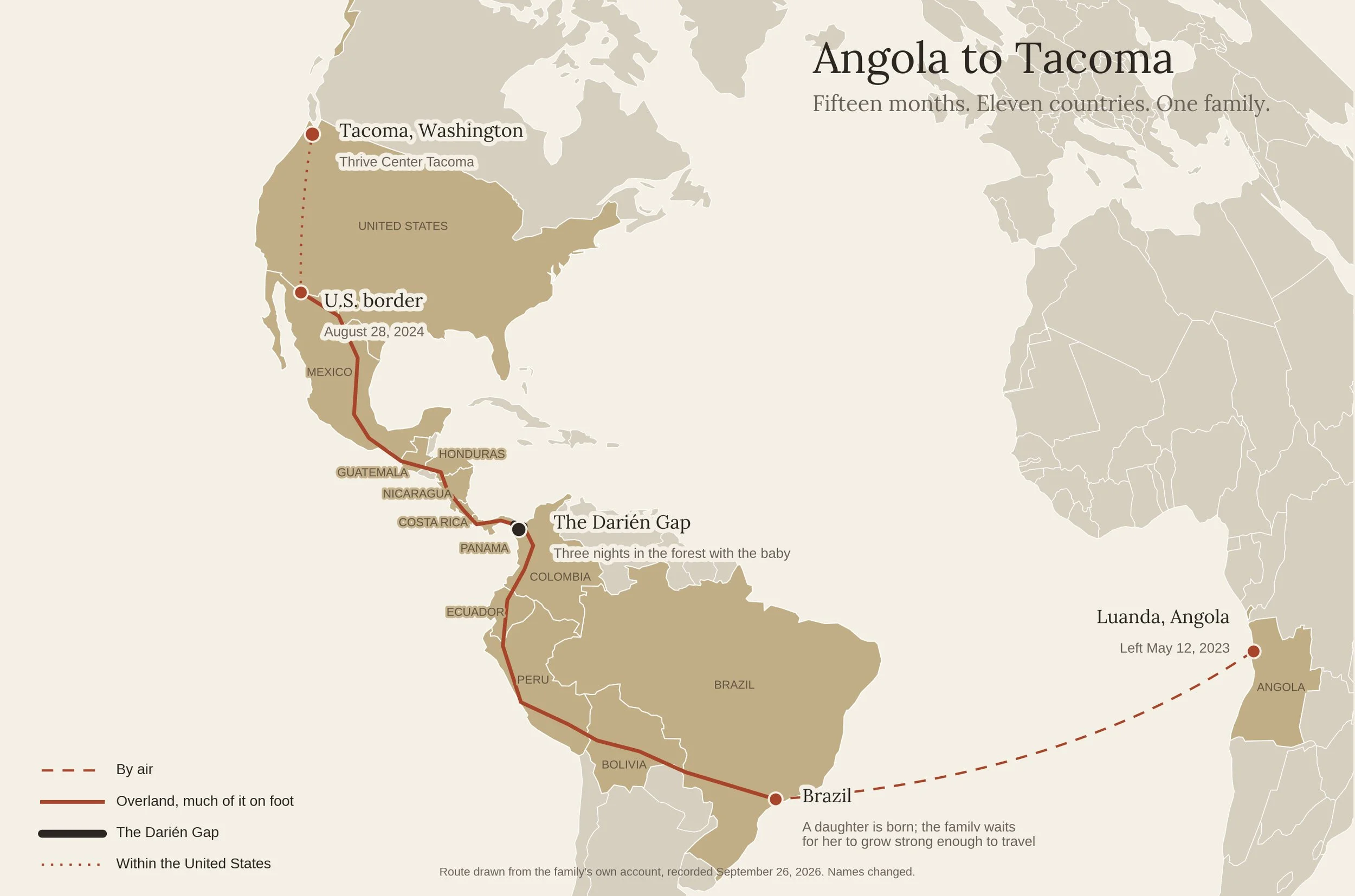
The family left Luanda on May 12, 2023, and reached the U.S. border on August 28, 2024. Their daughter was born along the way. Of all of it, the flight was the only leg he described without effort. Everything after that, he said, "is complicated."
That was all he said, and I didn't ask for more. Other families I spoke with that day went into detail: the floods, the bodies beside the path, the guides who vanished with everything they'd been paid to carry. Domingos gave me one line, and I think the brevity was the point. "To save our life, we did not have many choices."
Three nights in the forest with the baby. They had waited in Brazil for her to grow, and she was still a baby, small enough to carry, old enough to be afraid of the dark. Somewhere in that jungle, her parents made a bed for her on the ground three times, and three times she woke up, and they were still there.
They left Angola on May 12, 2023, and crossed into the United States on August 28, 2024. Fifteen months. In that time, a child was born, learned to hold up her head, and was carried through a jungle and across twelve borders. And through it all, when I asked, Domingos couldn't think of one stranger who had helped. Here, yes. In Brazil, no. Along the way, no.
Smaller, and safer
They arrived on August 28, 2024. Domingos gave me the date twice, once in French and once in English, the way you repeat a number you've carried a long way.
How they got from the border to a former hotel on Hosmer Street is a story for another day. What matters here is where they landed. In the language of the field, Thrive Center Tacoma is transitional housing: a stable room, a low barrier to entry, time to work toward whatever comes next. In the language of the people who live there, it's a village. More than a thousand people have called it home.
Domingos works at the airport now. The family has one room, and they've made it into three: a sitting room, a bedroom, and a kitchen, out of a curtain and a counter and a string of lights.
I asked him how this home compares to the one in Angola, and I meant the space, the square footage. He answered a different question. "My house was much bigger. But here, it is much more secure."
A whole house and a job with a title, traded for one room and airport shifts in a city where he knew almost no one. He said the word secure like it settled the matter.
Anna, who runs the Tacoma center, told me something that week I haven't forgotten. When people first arrive, she said, what they talk about is how safe they feel. And when it's time to move on, a lot of them don't want to. Not because of the room. Because it's the first place in a long time they've been able to rest.
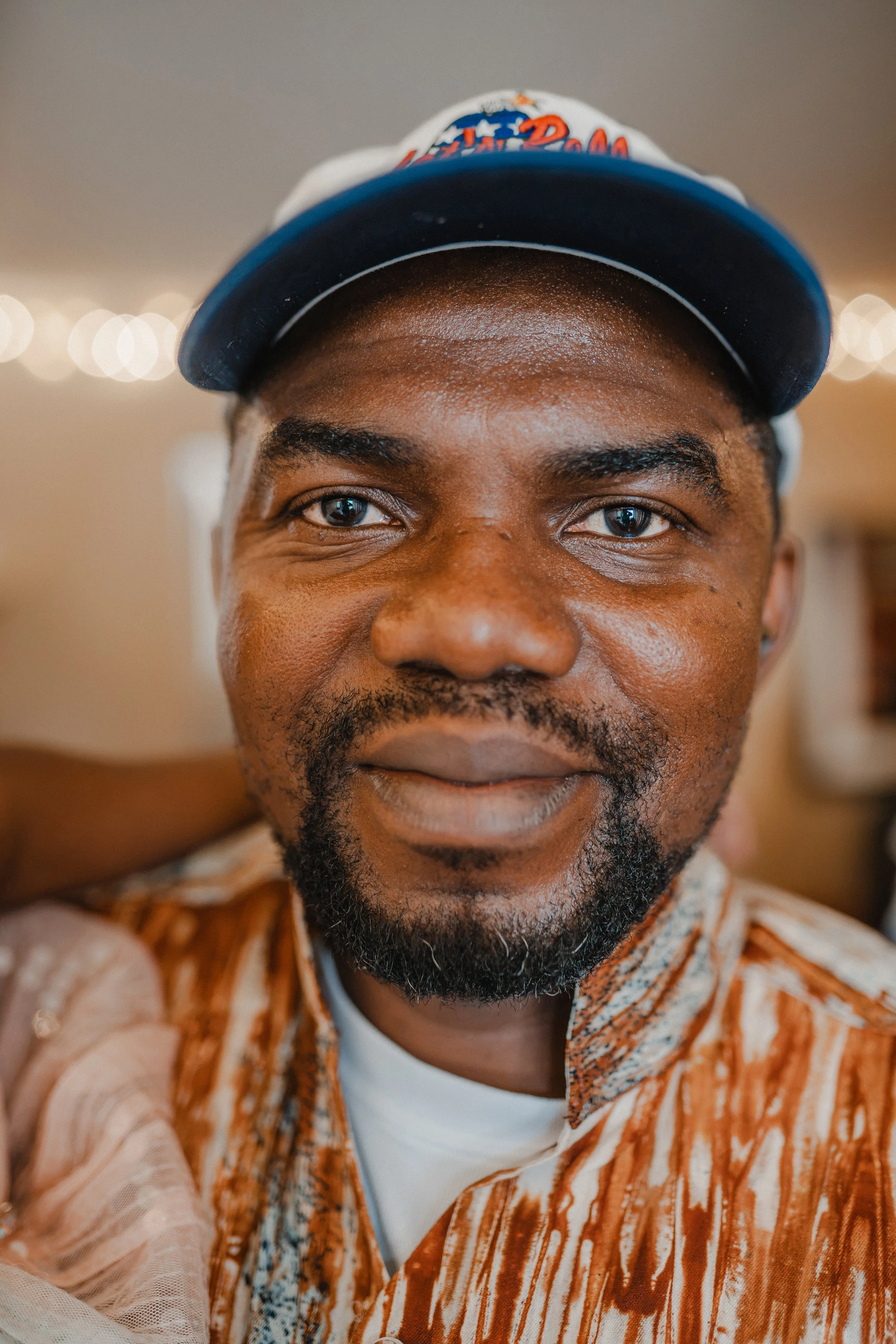
Nothing from Angola
Near the end, I asked the question I'd been asking in every room. Is there anything you carried with you from the beginning? Anything at all, however small, that came all this way?
Domingos looked around the room, at all of it, and shook his head.
"No," he said. "I left everything in Angola. There is nothing here that I brought from Angola."
I believed him. I'd already noticed. Then, while I was changing lenses to photograph the family, the television on the wall finally registered. A wedding was playing. A crowd, a courtyard, gifts being carried in.
It wasn't theirs. It was a channel from home, the kind you leave on in the background, and it happened to be showing a part of an Angolan wedding that Domingos explained to me without my asking. The civil marriage, he said, is one thing. This is the traditional part: the day the groom's family comes to the bride's, what is brought, what is given.
He had packed nothing. But he'd kept the channel. In a room with not one object from Angola in it, that was the thing from Angola.
"Thank you for letting me into your home," I said when we were done. It came out before I thought about it, and he took it with a nod.
The fear that crossed with them
I was packing up when I asked the last thing I ask everyone. Is there anything else I should know? Domingos didn't hesitate.
"We are living with fear."
He meant ICE. In the weeks before we spoke, a resident had come running to the office to say agents were at the laundromat across the street. Whether they were or not, everyone believed it. Every family I met that day brought up the arrests, whether I asked or not. A young man I interviewed that afternoon had been detained twice. A father from Afghanistan told me he was arrested at the airport on arrival, parole papers in his hand.
Here is what makes Domingos's fear so hard to argue with. This family did what the system asks. They presented themselves. They filed. They hold documents that say they may be here, and the documents say so until 2028. "Until 2028, we will still be legal here," he said. Then: "But we don't know what is going to be."
I asked him directly. So even now, you are still living in fear?
"Yes."
Hold that against the rest of his life. He grew up inside a war. He lost his wife's brother to violence. He slept three nights in the Darién with an infant. If anyone has earned the right to stop being afraid, it's him. And he said it anyway, in the safest place he has ever lived, in a level voice, like he was telling me the weather.
The word illegal
Before the mechanism, a word about the word. Plenty of Americans, hearing that a family walked here through Mexico, reach for it without thinking. Illegal. Is that what this family is?
Here is what the law actually says. In 1980, Congress wrote the international refugee convention into American law, and the statute is plain: any person physically present in the United States may apply for asylum, no matter how they entered or what their status is. That isn't a loophole. It's the point. Crossing the border without inspection is a misdemeanor, yes. But the same law requires that an asylum seeker get a full hearing before anyone can remove them. A federal appeals court said it again this spring: the right to apply for asylum belongs to everyone present or arriving in the country, unless Congress itself says otherwise.
So when Domingos and Isabel reached the border in August 2024 with a baby, they did the thing the law tells you to do. They presented themselves. They told the officers who they were and why they'd come. The government took their names and fingerprints, opened a file, and gave them a court date. Later, it gave Domingos a work permit, which is why he can work at the airport. All of it is on paper, in a federal system. Nobody is hiding. The government knows exactly where this family sleeps.
What they're waiting on is a decision. Until a judge makes one, they're allowed to be here and allowed to work, and their date is in 2028. About 2.3 million people are standing in that same line. You can call a family like that a lot of things. Illegal isn't an accurate one. They aren't hiding from the law. They're waiting for it.
One more thing, because it bears on the families who come after this one. On his first day back in office, the president declared an "invasion" at the southern border and used it to stop asylum seekers from applying at all. In April, a federal appeals court ruled that unlawful: the right to apply is set by Congress, and a proclamation can't erase it. As of June, the government said the border was still closed and that it expected to win on appeal. Domingos and Isabel got here before that door shut. A family reaching the same border today, with the same baby and the same reasons, might not be allowed to ask.
How the fear is made
Domingos's fear isn't vague. It has a schedule, and the schedule is public record.
Start with the wait. At the end of August, more than three million cases were pending in immigration courts, and nearly 2.3 million people in that line had already filed for asylum and were waiting to be heard. That's why a family that arrived in 2024 holds a date in 2028. For most asylum seekers, the wait isn't a delay in the process. The wait is the process. And this year the government started charging for it: $100 to file for asylum, $102 a year for every year the case stays open, no waivers, and a first work permit that used to be free and now costs $560. A man who works airport shifts to keep four people in a hotel room now pays to keep waiting.
Then the places where the waiting happens. Through 2025, ICE arrested an estimated two thousand people at immigration courthouses, often minutes after a government lawyer asked a judge to dismiss their case. A dismissal used to be good news. Now it was the trap: with the case closed, a person could be put into fast-track deportation with no hearing at all. When a federal court curtailed courthouse arrests this summer, the arrests moved. They moved to the ICE check-ins that people with pending cases are required to attend; in San Francisco, at least 539 people were arrested at routine appointments in nine months, more than half of all ICE arrests in the city. And they moved to airports, where ICE has detained people this year with pending applications and valid work permits in hand. Domingos goes to work at an airport every day.
Then detention. In July 2025, the Department of Homeland Security adopted a new reading of the law under which anyone who crossed without inspection is an "applicant for admission" who can be held without a bond hearing, however long they've lived here and however little risk they pose. The appeals courts have split on it. The Ninth Circuit, which covers Washington, rejected the government's reading in July; courts in the South and Midwest have gone the other way, and the government is still litigating. Whether you get a hearing depends on which state you're arrested in. Nearly 66,000 people were in immigration detention in July. Fewer than two percent of the new court cases filed this year allege any crime beyond the crossing itself.
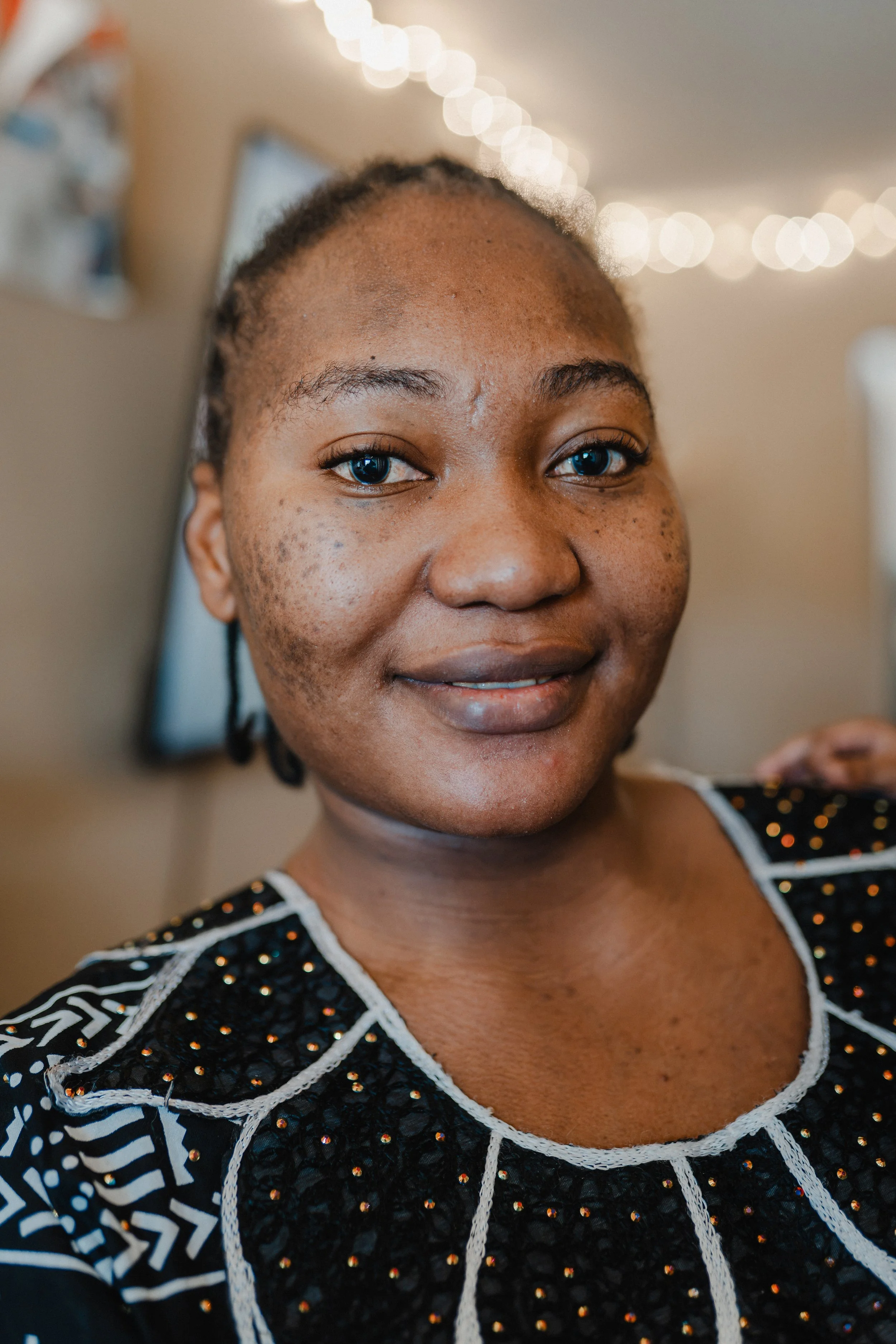
Then Angola. This year the government named forty countries whose citizens face what it calls immigration limits, and Angola is on the list. USCIS paused their asylum, work-permit, and green-card applications, and said it would go back and review, and potentially reverse, approvals already granted to people from those countries who arrived after January 20, 2021. A court struck down the pause in June. In August, an appeals court allowed the review of past approvals to proceed. Domingos arrived from Angola in August 2024. Until 2028, we will still be legal here. But we don't know what is going to be. He isn't guessing. He's reading the news, and he's reading it right.
None of this is weather. Every piece of it is a decision somebody made in an office far from Hosmer Street, and decisions can be unmade. It isn't complicated to say what the alternative looks like. Don't arrest people at the appointments you ordered them to attend. Give a person a hearing before you lock them up. Decide cases in months, not years. And judge a man's claim on what happened to him, not on which passport he was born under.
A shelter can't fix any of that. What a room on Hosmer Street can do is keep a family in one place, and together, while the country decides whether it meant what its own paperwork says.
What is left from Angola
I asked every family the same question that day, and every one answered differently, and not one of them described a building.
Domingos measured home in safety. Smaller, he said, but secure. After a life spent afraid, that was the unit that mattered.
He told me he'd brought nothing, and he hadn't. The curtain, the lights, the toys, the dishes, all of it bought here with airport money. They started from zero.
And still the television sat in the corner playing someone else's wedding on an Angolan channel, the way it would have played in a living room in Luanda. He hadn't turned it on for me. It was just on. When I asked about it, he explained the whole ceremony patiently: what the groom's family brings, what is given, who stands where.
He came with nothing in his hands. He came with his wife, who crossed a continent pregnant and then carrying a newborn, and with their daughter, and with whatever it is in a person that makes him leave the television on a channel from home on an ordinary afternoon.
Isabel said very little on my recording. She let her husband do the talking. But it was her brother. It was her pregnancy on the plane out. It was her arms, as much as his, in the forest for three nights. When people say a family carried each other, this is what it looks like: one person telling the story, and the other one having lived every word of it.
I don't want to tie this off neatly, because they can't. Home is where your people are, and their people are here. Home is also the place where the laundromat across the street might have agents. Both of those are true in the same room at the same time.
Thrive gave them a roof. The other families gave them a village. Nobody on Hosmer Street can give them an answer, and the answer is being decided by people who have never seen the lights on their ceiling.
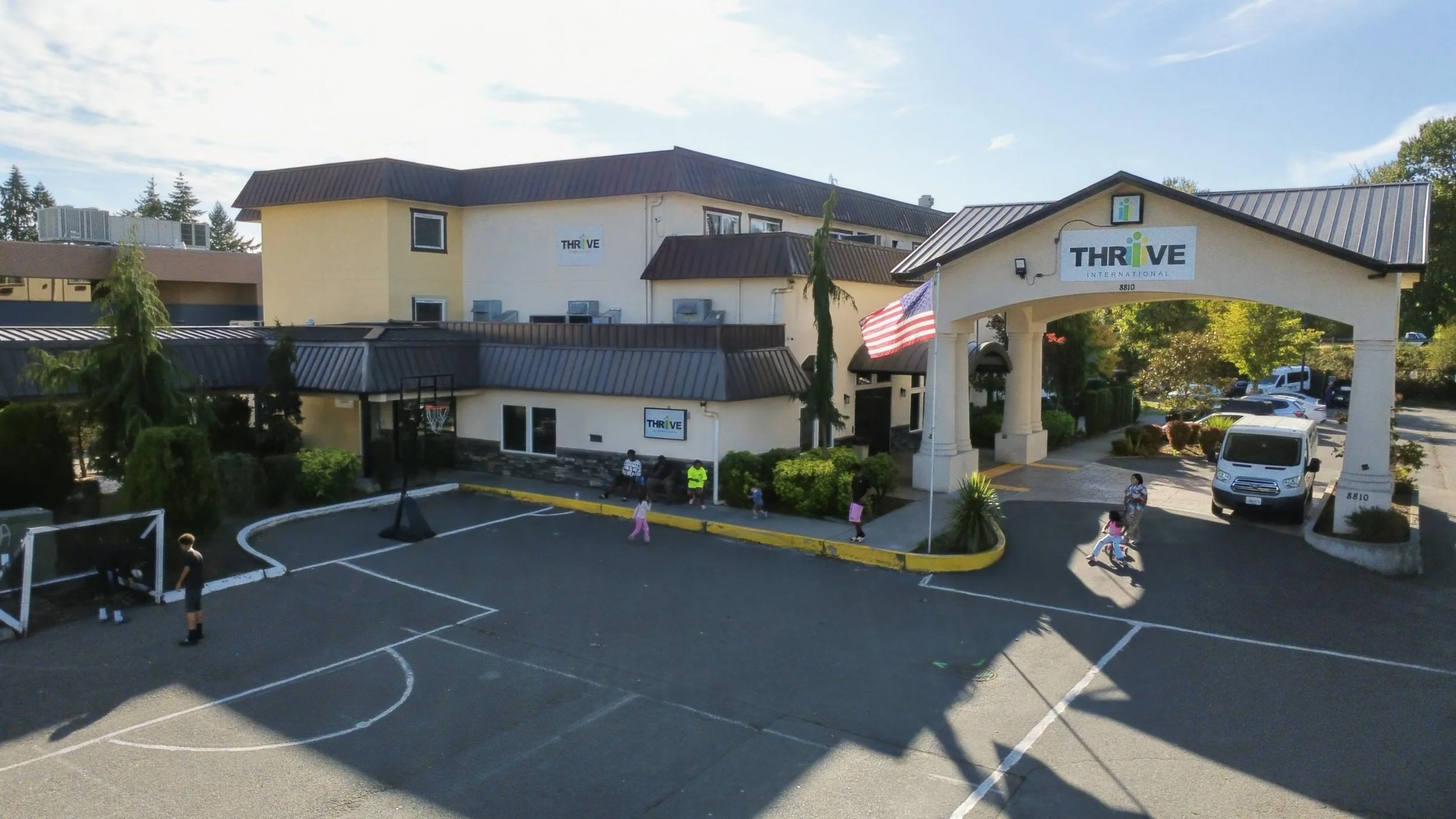
A waiting room for 2028
Before I left, I asked Domingos if I could come back in a year and ask what home means to him then. I want to know what the room on Hosmer Street says when another twelve months have passed, and what the fear says, and whether the paper marked 2028 still means what it meant the day I met him.
For now the lights are still on along the ceiling, over the curtain and the counter and the television playing a channel from home. The family has followed every rule, filed every form, paid every fee.
The channel will still be on, I suspect, in whatever room they're in by then. It's the one thing from home no border could take, and no policy can either.
"Thank you for letting me into your home," I said. He nodded. It is his. Whether it stays his is not up to him.